
How a truck inspector thinks about cargo theft and safety
Police Officer Jay Mancuso on the red flags, simple checks and the small conversations that stop freight fraud and save loads.
“I go out every single day, and I am trying to take the most dangerous truck I can find off the road.” — Jay Mancuso
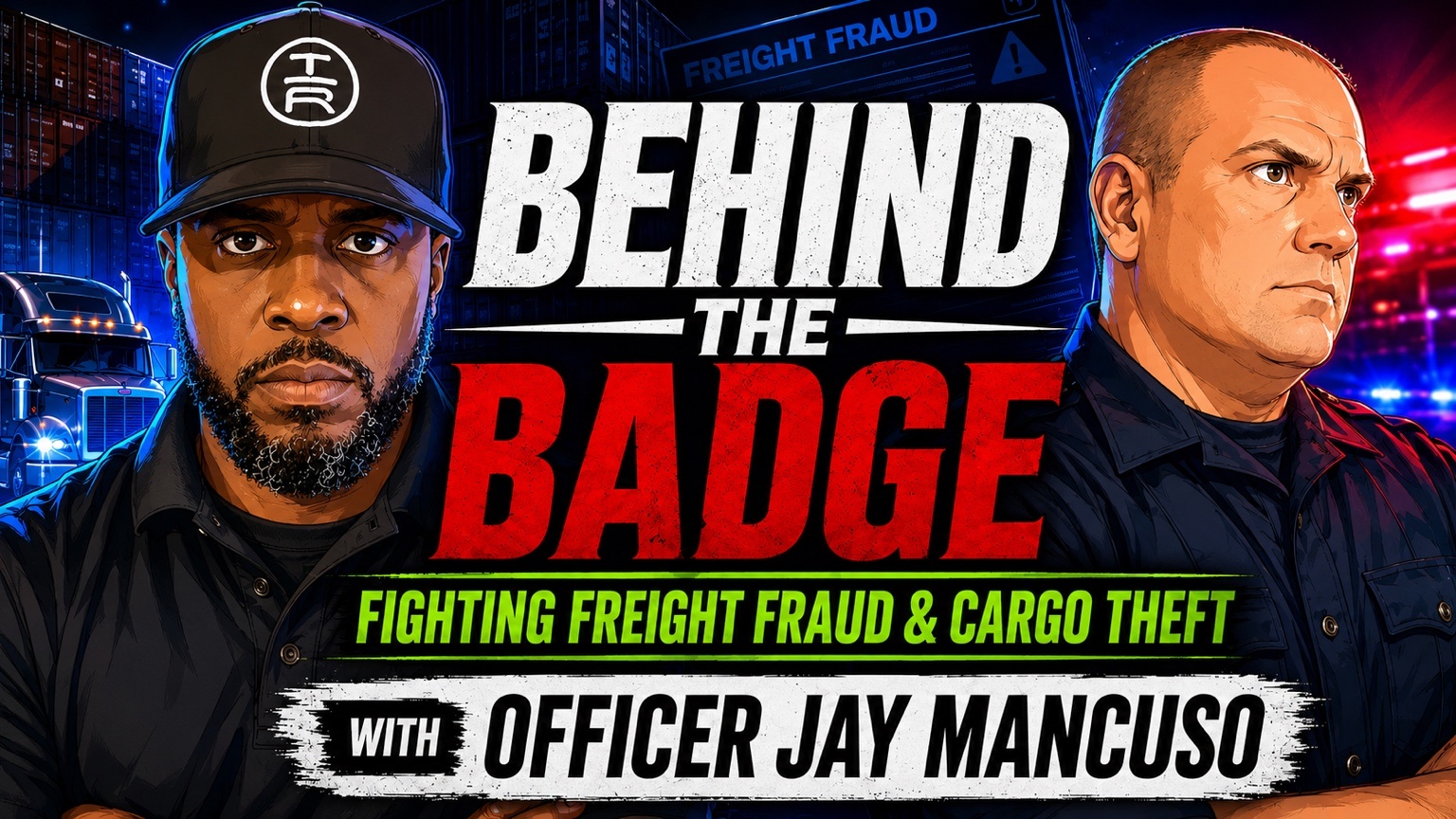
Jay Mancuso does not speak in hypotheticals. After 21 years in policing and years of experience as a commercial motor vehicle inspector, his perspective is practical: many losses and safety risks can be prevented when people slow down, document the details, and communicate with one another.
Here are some of the most important actions Jay believes can make a real difference.
Make Roadside Inspections Calm and Productive
According to Jay, the best thing a driver can do during an inspection is be honest and respectful. That immediately sets the tone and can often make the inspection go more smoothly.
Drivers should be prepared to:
Provide the necessary paperwork and be honest if they missed something during the pre-trip inspection.
Point out the fire extinguisher and disclose anything they already know may be wrong with the truck.
Keep the truck in order, with registrations, DOT markings, and the VIN plate clearly visible.
Why does this matter?
Jay shared the story of a driver who claimed to have completed a pre-trip inspection but could not produce a fire extinguisher. What began as a small issue became the reason the entire interaction escalated.
Jay prefers education and repair over punishment whenever possible, but honesty is what makes that approach possible.
“The one thing I can’t stand is when someone lies to me.” — Jay Mancuso
Prevent Freight Fraud With Five Minutes of Documentation
Cargo theft is no longer limited to criminals breaking into trailers. Jay described two major types of theft: fraud at pickup and opportunistic theft after a legitimate pickup or delivery.
Fraud at pickup can involve fake carriers, fraudulent paperwork, temporary registrations, or someone pretending to be an authorized driver. Opportunistic theft often happens when a legitimate load is left in an unsecured location with poor lighting, limited surveillance, or inadequate lot security.
Jay recommends that shippers, brokers, and drivers take a few repeatable steps before releasing a load:
Verify the driver’s identity by photographing the front and back of the driver’s license.
Photograph the truck, DOT markings, trailer plate, and VIN sticker inside the door.
Document any ghost lettering, temporary tags, or unusual markings.
Confirm the expected route and estimated arrival time directly with the driver.
Clearly explain that the load cannot be rerouted without approval from a verified contact.
Scan and verify temporary registrations and VINs.
Place a working phone number on the shipping documents that reaches a live person.
Jay also shared a powerful example of how quickly theft can happen. Over the Fourth of July, criminals entered 33 trailers and stole products from a lot that was believed to be secure.
Early notification is critical. When a load has been missing for six hours and investigators have little information about the driver, truck, trailer, or route, recovery becomes significantly more difficult.
What Dispatchers and Brokers Should Require
Jay’s message to brokers and dispatchers is simple: collect real, verifiable information, especially when working with a carrier for the first time.
If the DOT number, driver’s name, truck photographs, or registration information cannot be confirmed, slow the process down and investigate before releasing the freight.
Due diligence is not optional. It can be the difference between a successful delivery and a complicated investigation involving the carrier, broker, shipper, driver, insurance company, and law enforcement.
From law enforcement’s perspective, a clear information packet can help investigators act faster. That packet should include:
Driver’s name
Truck and trailer plate numbers
DOT number
Trailer number
Seal number
Photographs of the equipment
A contact person who will answer the phone
During roadside stops, several small inconsistencies can also reveal a larger problem. Confusing ELD records, missing paperwork, temporary plates, conflicting driver information, and unexplained route changes may turn a routine safety inspection into a criminal interdiction.
Drivers Are the Eyes of the Road
Jay also reminded listeners that truck drivers are uniquely positioned to recognize human trafficking and other suspicious activity.
Drivers spend countless hours traveling through truck stops, rest areas, warehouses, parking lots, and communities across the country. That visibility gives them an opportunity to notice things that others may miss.
If you observe something suspicious:
Record the exact time and location.
Write down plate numbers and vehicle descriptions.
Note the trailer color, company markings, decals, or visible damage.
Provide descriptions of the driver and any passengers.
Trust your instincts and report what you observed.
Law enforcement would rather investigate a report and determine that everything is okay than miss an opportunity to help someone in danger.
Jay offered an especially important reminder: if you see children in circumstances that do not make sense, report it. Even a small, respectful report can give officers the information they need to quickly rule something in or out.
The Cultural Fix: Care and Relationships
Throughout the conversation, Jay repeatedly returned to one word: care.
Drivers show they care by completing pre-trip inspections, maintaining their equipment, keeping DOT markings visible, and answering questions honestly.
Law enforcement officers show they care by educating drivers, participating in industry outreach, and making themselves available as trusted contacts.
Jay encourages trucking companies, safety managers, brokers, and drivers to build direct relationships with local agencies. Ask whether the department has DOT or commercial motor vehicle inspectors. Request their email addresses, invite them to provide safety presentations, and establish those connections before an emergency happens.
The trucking industry and law enforcement work better when they communicate before there is a crisis.
Closing Thought
If you remember one action from this conversation, make it this:
Before releasing or picking up a load, take photographs of the driver’s license, truck, DOT markings, trailer plate, and VIN. Then make sure there is a verified phone number on the shipping paperwork that reaches a real person.
Those five minutes of documentation and one short conversation can prevent a disproportionate amount of freight fraud and cargo theft.
For Jay’s stories, roadside experiences, and deeper explanation of the warning signs investigators look for, listen to the full interview with Jay Mancuso on That’s Delivered Podcast with Trucking Ray.
Also, be sure to check out Tell Me Everything: Calibration with Danielle Spinelli.
Listen here: Fraud Girl, Season 2, Episode 30: The Roadside Clues