How Fleets Can Stop Making Company Problems the Driver’s Problem
Jane Jazrawy on Training That Actually Teaches, Fixing Routing and Wait Times, and Why Authenticity Beats Slick Recruiting
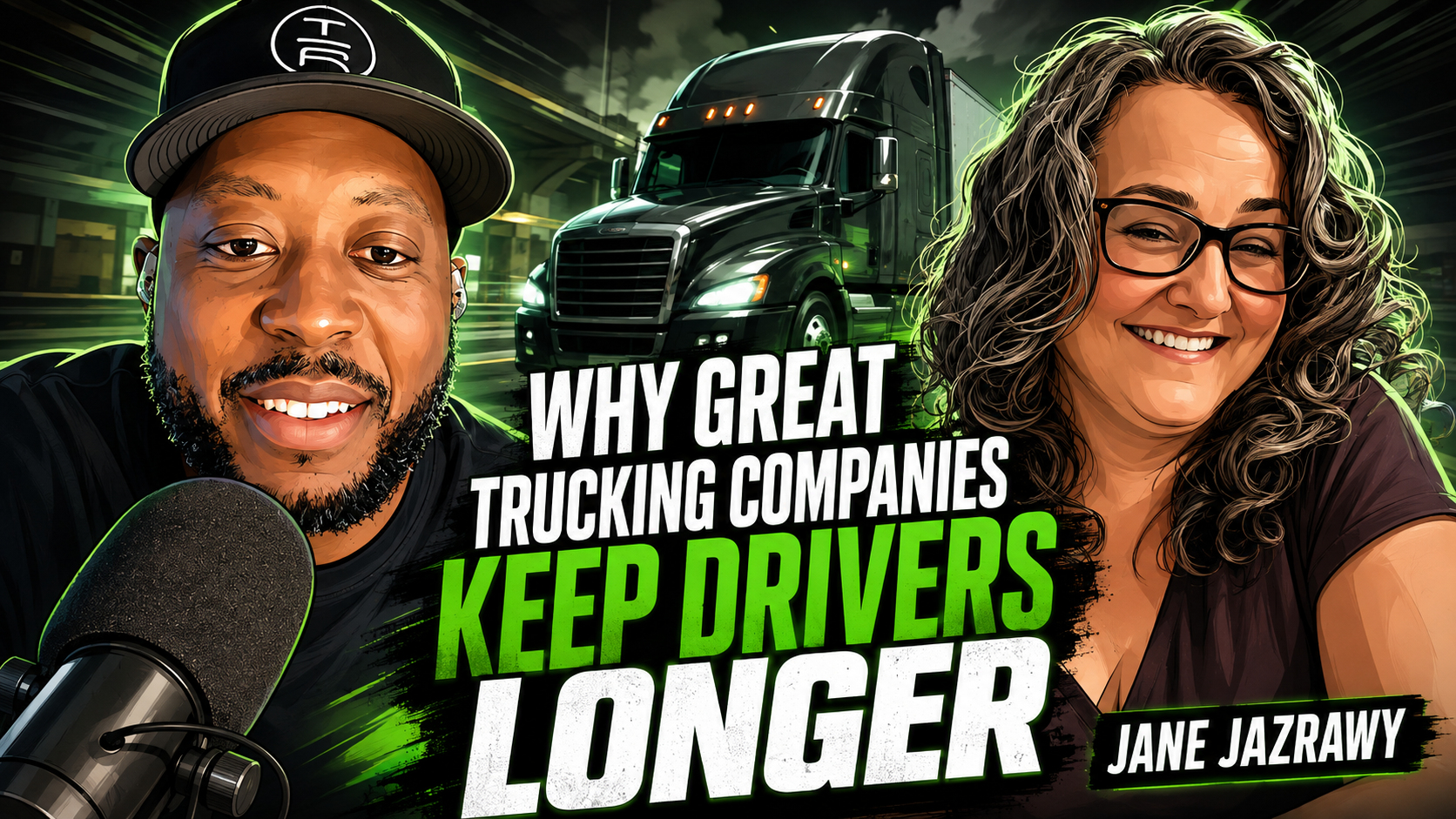
“What I would eliminate is downloading the issue, making it the driver’s problem.” — Jane Jazrawy
Jane Jazrawy opened with a simple but corrosive insight: too often, company policies push operational headaches down to drivers and call the problem solved. That sentence became the through line of a 70 minute conversation about what separates fleets drivers want to stay with from fleets they want to leave.
Training That Checks a Box Versus Training That Teaches
Jane’s biggest pet peeve is the classic safety department approach: send drivers a five minute video, check the compliance box, and file it away. It may help protect the company in court, but it does not necessarily change behavior.
Drivers press play. They pass a simple quiz. Yet no one coaches them on how to apply what they learned, whether that means backing into a difficult dock, properly securing cargo, or responding to a real world safety situation.
Her prescription is specific and practical: pair online learning with purposeful human follow up. Every CarriersEdge course comes with suggested post course activities, including short classroom exercises, one on one practice sessions, and social posts designed to encourage discussion.
Online learning provides knowledge. Live follow up provides practice, coaching, and feedback. When fleets treat training as a one time delivery instead of an ongoing learning process, very little changes.
“Online learning is really good for getting knowledge. Applying it, practicing it, and getting feedback is not online.” — Jane Jazrawy
Make the Company Fix Problems, Not the Driver
One frustration Jane would eliminate is the managerial shrug, the customer who routinely makes drivers wait five hours while the company leaves drivers to deal with the consequences.
Instead of telling drivers to handle the fallout, the best fleets reroute, negotiate, or escalate the issue so drivers are not left to absorb the delay. When companies take ownership through routing changes, customer conversations, and process improvements, drivers notice.
Concrete solutions she has seen work include:
Tracking repeat slow receivers and routing around them whenever possible
Giving drivers a dedicated operations contact who can negotiate appointment windows
Establishing clear detention policies that explain how delays should be reported and how drivers will be compensated
Those solutions require time from the operations team upfront, but they give hours back to drivers and demonstrate that the company truly has their backs. That kind of support builds loyalty and often costs far less than continually recruiting replacements.
Communication Isn’t a Slogan, It’s the Language You Use Every Day
When drivers say they value “the people” at a company, they often mean they appreciate clear communication from real human beings.
Jane’s driver surveys, 35 questions administered twice a year for participating fleets, consistently show pay and people near the top of both the “like best” and “needs improvement” categories.
The problem is rarely about money alone. It is also about communication. If a pay change becomes necessary, explain why it happened, what alternatives were considered, and what the company plans to do next.
Jane warns against using marketing language in internal conversations. Phrases such as “we treat our drivers like family” mean very little if that promise disappears the moment a driver reports a problem.
Authentic, specific answers will always mean more than polished slogans.
Ask the Right Questions, Then Act on the Answers
CarriersEdge developed Best Fleets to Drive For as both an award program and a serious listening exercise.
Jane emphasized the importance of asking the right questions, collecting honest feedback, and carefully reviewing the results. Some fleets receive their annual reports, hold meetings, and develop action plans. Others receive the information but do very little with it.
The difference often appears in the following year’s survey scores.
Designing surveys, organizing advisory councils, meeting with drivers, and following up on recommendations requires time. However, that investment helps fleets identify the specific improvements that will make the greatest difference.
Asking drivers for feedback only works when they can see that someone listened.
Return to Fleet Behavior and Turnover Myths
One surprising point Jane shared is that many drivers who leave after a major change, such as a new ELD system, pay structure, or technology rollout, eventually return.
Some turnover is cyclical. Drivers may leave because they are frustrated, want to test the market, or believe another company will offer something better. Some later return after discovering that the original change was not as catastrophic as they expected, or that the grass was not greener elsewhere.
That pattern has helped fleets become more strategic about re recruiting former drivers. Some companies automate stay in touch campaigns or establish rehire windows that allow returning drivers to preserve certain benefits.
Jane also noted that some fleets are taking a firmer position: if a driver chooses to leave, a return is not guaranteed.
Different market conditions allow for different philosophies, but fleets that create career paths and solve driver problems before they become breaking points tend to experience lower and more stable turnover.
Practical Ways to Engage Drivers Wherever They Are
Drivers are rarely gathered in one place, so Jane’s approach to reaching them is intentionally simple:
Host live Zoom or Microsoft Teams meetings and record them for drivers who cannot attend
Collect questions in advance and provide a clear agenda
Offer small incentives for participation until attendance becomes habitual
Use driver committees or union stewards to collect and communicate feedback when leadership cannot reach everyone directly
Technology has eliminated many of the old excuses for not communicating with drivers. Companies do not need perfect production quality. They need consistency, honesty, and follow through.
One Practice Every Fleet Should Adopt, Be Authentic
If Jane could recommend one essential practice, it would be authenticity.
Do not use marketing language to avoid difficult conversations. If the company cannot provide a requested benefit, explain why. Be transparent about the costs, limitations, and trade offs involved.
Authenticity helps align expectations and reduces the disappointment drivers feel when workplace reality fails to match recruiting promises.
It is also a powerful cultural differentiator. Drivers quickly recognize when a message is not genuine.
What Will Change Driver Training Over the Next Five to Ten Years?
Jane expects driver training to evolve alongside changes in transportation technology. Electric vehicles, automation, and greater connectivity will influence both what drivers need to learn and how that information is delivered.
She anticipates two major trends:
More microlearning, or short learning bites, for drivers who prefer focused, targeted lessons
A renewed interest in longer form training for complex skills that require greater depth, practice, and understanding
The format of training will ultimately follow how drivers work and what modern trucks require. As vehicles, routes, and responsibilities change, the knowledge and skills drivers need will change with them.
Effective training programs will adapt.
The One Line to Remember
Fix the things drivers should not have to fix themselves.
When companies take ownership of difficult operational problems, training and communication have a chance to work. When they push those problems back onto drivers, everything else begins to lose its meaning.
For the complete conversation with Jane Jazrawy including the origins of Best Fleets to Drive For and the survey process CarriersEdge uses listen to the full episode of That’s Delivered Podcast.
You can also learn more at BestFleetsToDriveFor.com and CarriersEdge.com.
Sponsors & Affiliates
Special thanks to our sponsors and affiliate partners who support this podcast and make this content possible:
Bumper to Bumper Easy CDL — https://b2b.easycdl-online.com/
Truck Parking Club — https://truckparkingclubcomllc.sjv.io/c/5766992/2019579/25053?trafsrc=partner_api (Use code DELIVERED)
Tree Ring Digital — https://www.treeringdigital.com/delivered/
Seat Specialists — https://www.seat-specialists.com/ (Use code TR104U for 10% off)
We are deeply grateful for their support and partnership.
If one idea from this conversation stays with you, let it be this:
Training is not a file sitting on a shelf. It is a continuous process, teach, practice, provide feedback, and repeat. Make that process real, and drivers will notice.
Check Out That’s Delivered Podcast's New Home
That’s Delivered Podcast now lives at its new home on the official website, where you can find episodes, updates, newsletters, and ways to connect with the community.
Even when we are off, we are online. The road never stops, and neither do we. ~ Trucking Ray
Visit the new home: