“Nearly 40,000”: John Rojas and Martin Garsee on the CDL Training Registry
What students should check before choosing a school, and why training oversight matters.
A CDL can open the door to a new career. The training behind it helps determine how prepared a driver will be when that first job begins.
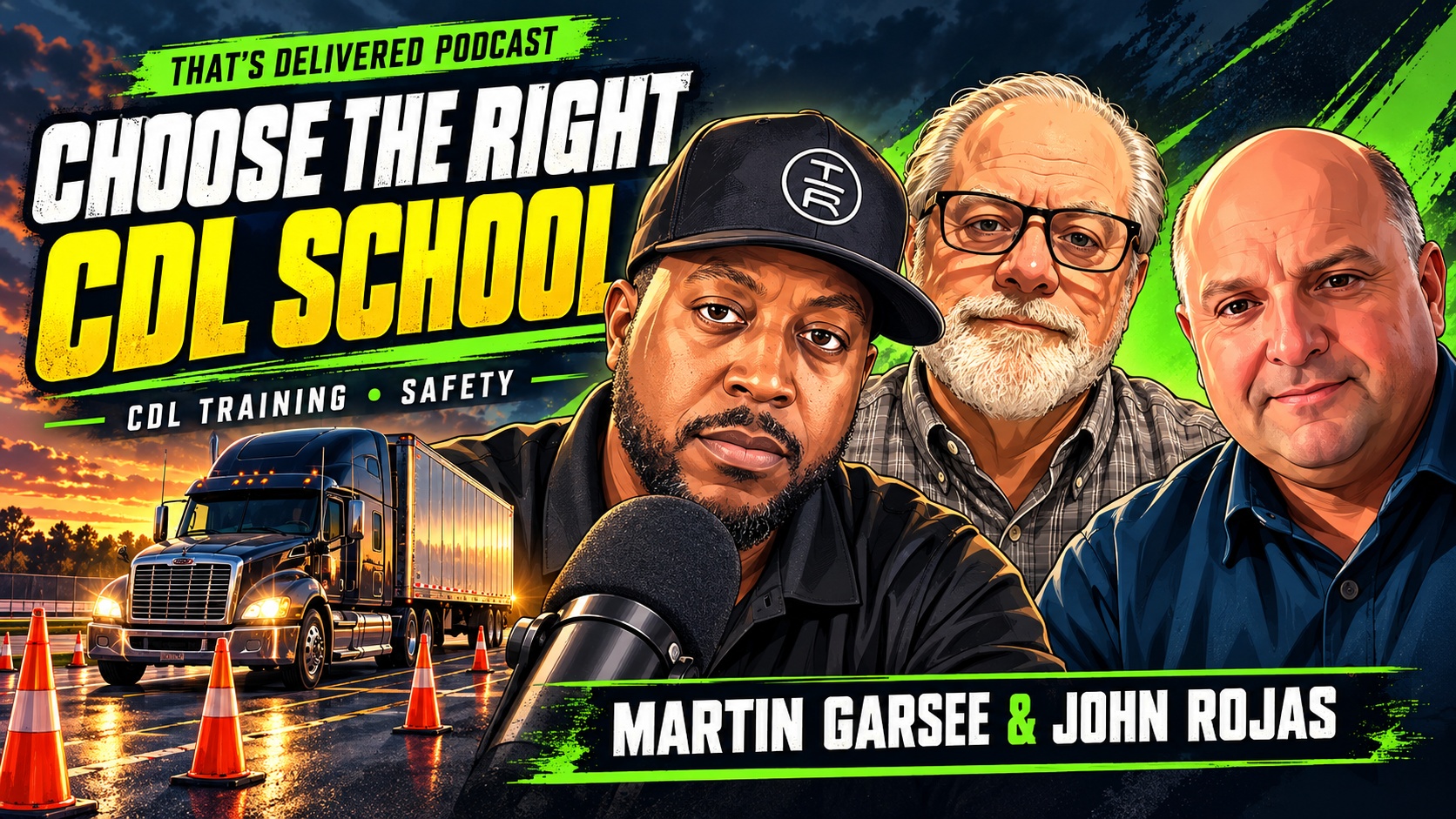
In this episode of That’s Delivered Podcast, John Rojas and Martin Garsee join Trucking Ray to discuss Entry-Level Driver Training, the Training Provider Registry and what students should know before choosing a school.
Watch the episode in the 10-4 Mindset Community
Growth, Oversight and Opportunity
“There went from about a thousand training providers to nearly 40,000 overnight,” John says during the conversation.
John uses that description to illustrate the growth he saw in the training landscape and the challenge of keeping oversight alongside it. From there, our conversation explores how the registry operates, what auditors look for and how schools can help students build a strong foundation.
John and Martin bring their experience to a shared goal: helping new drivers receive meaningful training and enter the industry prepared.
What ELDT Was Meant to Do
Entry-Level Driver Training established minimum federal requirements for certain CDL applicants and endorsements.
Martin, who participated in the negotiated rulemaking, describes ELDT as “a great summary and guideline.” Both guests discuss the work behind those standards and the importance of putting them into practice through qualified instructors, suitable equipment and consistent instruction.
For students, that means understanding what a program offers before making a commitment.
Before You Pay Tuition
John and Martin encourage students to look beyond price and completion time.
Check the training location. Search the FMCSA Training Provider Registry and review its status.
Confirm state requirements. Ask whether the school holds any required state licenses or approvals.
Ask about individual practice. Find out how much time you will spend backing, performing inspections and driving on the road.
Visit the school. Meet the instructors and see the equipment you will use.
Understand the support. Review tuition, refunds, retesting and job-placement assistance before signing.
These questions help students choose a program that fits their needs and career goals.
A License Is the Beginning
Passing the CDL test is an important milestone. New drivers continue learning as they move into their first job.
John and Martin discuss carrier finishing programs, mentoring and support after graduation. Their measure of success includes safe habits, steady employment and the confidence to build a lasting career.
They also recognize the investment students make. Time, tuition and family income are part of the decision. Strong training and effective oversight help protect that investment.
What Comes Next?
Martin calls for greater recognition of truck driving as skilled work and better access to training funding.
John emphasizes consistency between states and clearer career pathways for young drivers.
Both see opportunity in strengthening the connection between schools, employers and the people preparing to enter the industry.
This Week’s Driver Updates
Medical-certification proof changed October 12.
CDL and CLP holders licensed outside Alaska can no longer rely on a paper medical certificate as proof of certification. After a physical, verify that your state record reflects the update. Alaska retains a temporary exemption through October 12, 2027. Read the FMCSA notice.
More flexible HOS options moved another step forward.
FMCSA opened comments on research involving a pause in the 14-hour window and more flexible sleeper splits. These study notices do not authorize every driver to use those options today. Comments close December 7. Review the sleeper-berth notice.
Driverless trucks received a warning-beacon exemption.
Effective October 7, qualifying Level 4 operators may use cab-mounted beacons instead of traditional roadside warning devices under specified conditions. Human-driven trucks remain subject to existing requirements. Read FMCSA’s decision.
Automation protections are entering labor agreements.
The Teamsters announced an October 7 US Foods contract covering more than 500 Southern California workers. The union reports wage gains, maintained employer-paid health coverage and language protecting work from automation. Read the announcement.
Watch the Full Conversation
Join us for “CDL Training, Safety, and Choosing the Right School” with John Rojas and Martin Garsee, available now in the 10-4 Mindset Community.
“I don’t claim to know it all. I just want to learn about it all.”
Keep Trucking Keep Moving and remember, don’t stress, just do your best …and that’s delivered.
Trucking Ray
Wear the 10-4 mindset
Keep a little Trucking Ray style in your everyday rotation. Shop the 10-4 Mindset Tee and the Trucka Pleeease Tee at truckingray.com.
Join the 10-4 Community | Shop Merch