The dash‑cam paradox: remove the phone, not just record it
How Truce leverages drivers’ smartphones, AI, and ‘engineer it out’ thinking to cut crashes and save fuel.
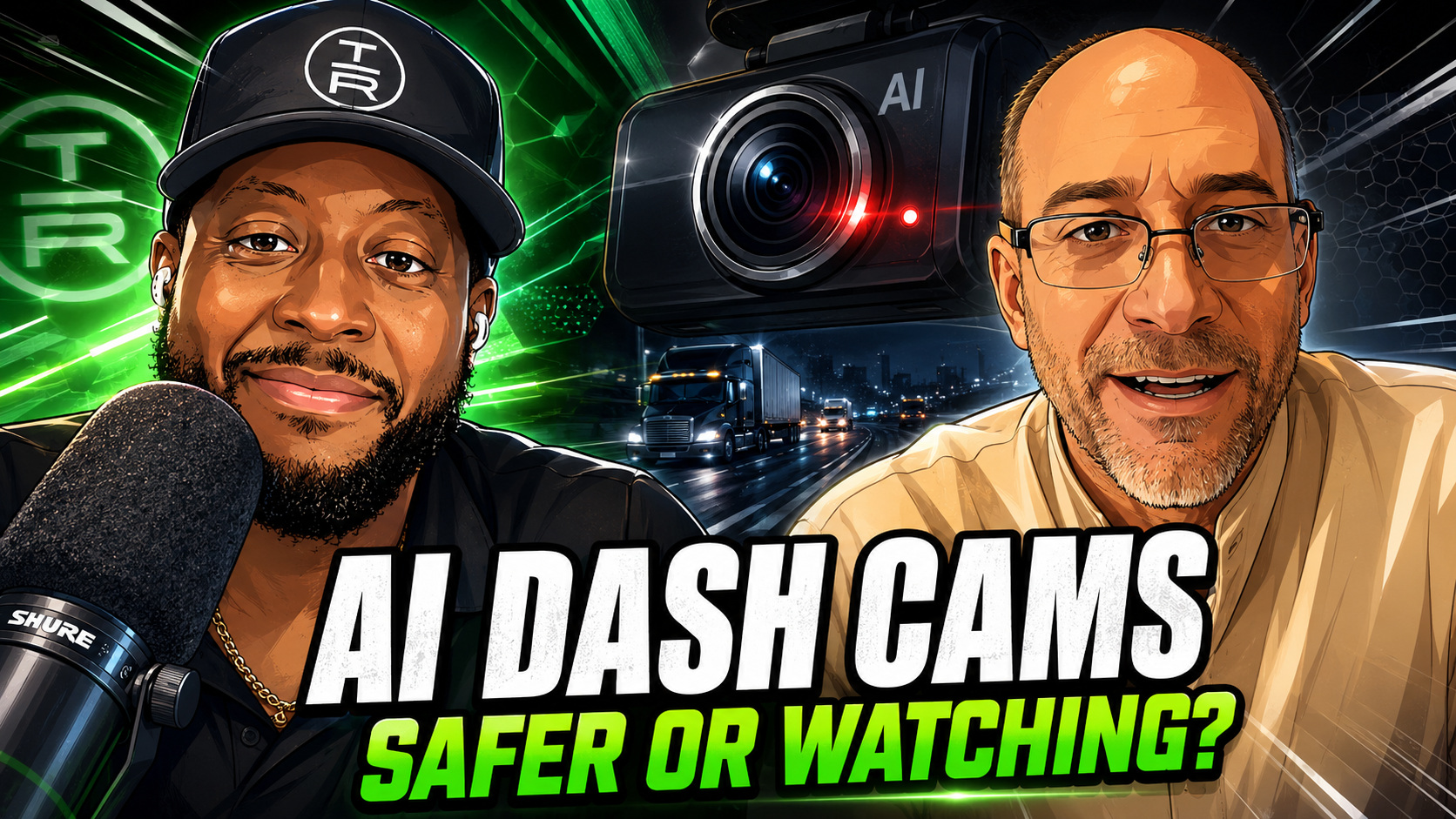
“If you’re driving with a Truce‑enabled vehicle, the phone’s no longer an issue.” — David Coleman
David Coleman has spent roughly 38 years in fleet operations and product development. He told Trucking Ray one simple, uncomfortable truth: the phone is designed to grab your attention, and traditional dash cams too often just document the problem instead of preventing it.
The dash‑cam liability paradox
Coleman named what he sees as the industry’s blind spot: fleets bought cameras to help with collision claims and insurance, but inward‑facing footage can create a “liability paradox.” Cameras capture proof of phone use, and that proof is discoverable after an incident.
Truce’s answer is not another better camera — it’s an engineering control that removes the stimulus. Their platform enforces a phone policy at the device level and then layers AI dash‑cam functions on top, so forward‑facing video still helps with collision analysis while phone use is blocked automatically.
“We engineered out device distraction,” David said. “Now our AI dash cams do everything everyone else does with one major difference — the phone’s no longer an issue.”
That shift matters because Coleman argues cameras that only report after the fact still leave a nontrivial tail of risk. He points out that vendors sometimes report big reductions — the Sam’s Era example of a 96% drop in phone use — but those metrics can be limited by capture rules, speed thresholds, or long multi‑year timelines. Even a 90% success rate leaves a dangerous 10% that can produce a single catastrophic verdict.
OSHA’s hierarchy of controls, applied to phones
Coleman borrows from OSHA: the top control is elimination. Education (billboards, training) is low on the efficacy ladder. Truce aims for the top — remove the problem so you don’t have to rely on people constantly policing themselves.
That choice changes how fleets think about discipline and retention. Coleman noted the hard trade‑off: the drivers who are most “responsive” to customers may also be the ones most tethered to their devices. Letting go of good drivers for a behavior that’s as addictive as a phone is costly; engineering the distraction out preserves talent while reducing risk.
Smartphones as the edge, not the enemy
Instead of duplicating expensive hardware, Truce leverages the smartphone as the edge computer. Coleman walked through the practical gains:
phones already have the processor, connectivity, and language settings drivers need;
processing on the phone yields cheaper, faster alerts in the driver’s native language;
upgrading is automatic as drivers replace phones — hardware‑centric cameras become obsolete the moment you buy them.
In short: “Why pay twice?” The platform uses the phone for compute and a low‑cost peripheral dash cam when needed, which lowers the barrier to deployment and insurance compliance.
Behavior change that actually sticks (and the dollars behind it)
Truce bundles distraction controls with driver scoring, leaderboards, and individualized coaching delivered on the mobile device — not in monthly reports that arrive too late to matter. Coleman says scoring the person, not the truck, closes the loop: drivers see real‑time scores, compare on leaderboards, and get immediate, personalized coaching.
The financial math is concrete. Coleman estimates a driver can improve fuel economy by 15–30% between worst and best performance. Even a modest 10% improvement translates into roughly $8,000 saved per truck per year in fuel (his rounded example). Schneider’s old insight — the safest drivers often have the best fuel economy — shows these aims align.
What changes if fleets adopt this model
Coleman frames the practical wins:
lower total cost because you avoid redundant hardware;
a smaller, faster path to behavior change because coaching and scores live with the driver on their phone;
preserved talent, since you can correct behavior without automatic termination;
parity with what insurers want, but at a fraction of the price.
He also cautioned against fear of surveillance. The point, he said, is safety and enablement, not punitive oversight.
The clean implication
If you’re still treating cameras as evidence‑collectors first and prevention second, you’re building a record of things you didn’t solve. Shift the control upward: remove the stimulus, put coaching where drivers can use it, and let the smartphone be the tool that makes those things cheaper and faster.
If you want the fuller conversation (including how Truce configures allowed calls, language‑based alerts, and their family offering for teen drivers), listen to the episode or visit truesoftware.com David Coleman’s contact is [email protected].
Think about one change you could make this month that removes a temptation rather than punishes it — that’s the move Coleman argues fleets should be making.
Check Out That’s Delivered Podcast's New Home
That’s Delivered Podcast now lives at its new home on the official website, where you can find episodes, updates, newsletters, and ways to connect with the community.
Visit the new home: https://thatsdelivered.com
Introducing truckingray.online
Trucking Ray Nonstop is your online destination for trucking tools, road safety alerts, weather updates, industry content, community connections, and more to help you on and off the road.
Visit: https://truckingray.online
Even when we are off, we are online. The road never stops, and neither do we. — Trucking Ray