The driver who turned a nine‑month recovery into 'no driver left behind'
Jennifer Hartung on a seven‑day CDL, a nitroglycerin load, and building Your Co‑Driver and Hart-Driven to keep injured drivers from falling through the cracks.
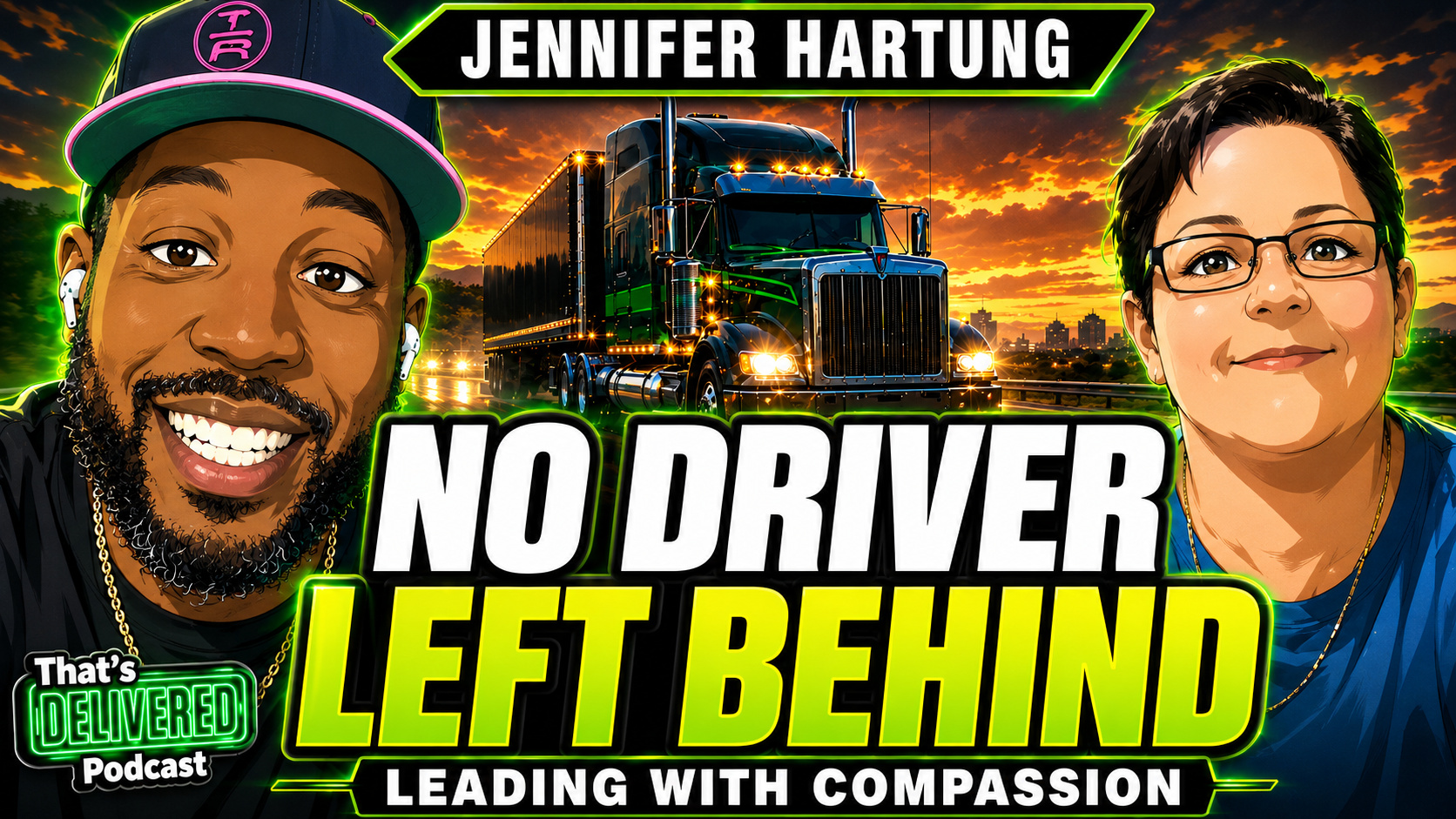
“You may not see us and you may not even hear from us, but we’re still people.” — Jennifer Hartung
Jennifer Hartung spent 26 years behind the wheel. She earned her CDL after a seven-day class, hauled hazardous loads (yes, nitroglycerin), and walked away from a 2014 crash that left her and her partner badly injured. The story she tells on the podcast isn’t nostalgia. It’s the thread that became two organizations: Your Co-Driver, a peer support line for new drivers, and Hart-Driven Foundation, a charity that shows up when drivers can’t work.
Why the first 90 days end so many careers
“Thirty-three to thirty-five percent of drivers leave in the first ninety days,” Jennifer says.
That’s the number she built Your Co-Driver around. The problem isn’t always pay or hours; it’s the small, practical surprises that land new drivers off the road.
Jennifer’s example is exact: a rookie who couldn’t release a fifth wheel because no one told him he had to back up into it. Or the quiet, long hours alone where a new driver’s first night in a sleeper becomes a long stretch of panic, family at home, unfamiliar routes, and nobody to ask.
Your Co-Driver is that safety valve: a real person to call with questions after offices close, a voice that says, “you’ll get through this,” and the practical tips that keep a new driver from quitting before they’ve had a chance to learn the job.
The accident that launched Hart-Driven
In 2014, Jennifer was in a headline collision. A vehicle ran under the trailer at roughly eighty miles an hour. Both drivers were badly hurt. Jennifer needed two surgeries and nine and a half months before returning to work. While on workers’ comp, they nearly lost everything.
What stung most was the silence. Organizations that claim to help drivers didn’t answer. Her company didn’t check in. From that gap came Hart-Driven Foundation, built to be the one group that delivers when the industry doesn’t.
Hart-Driven shows up in practical ways: Walmart and Target gift cards, diapers, clothes, food, help paying bills, and the phone call that says, “How are you today?” Jennifer tells a story of a driver with a newborn and no income; a simple pack of diapers and a card made the difference. She’s currently fundraising to raise $5,000 for a small office and storage so donated supplies don’t pile up in her living room.
“If we say we’re gonna do it, we’re gonna do it.” — Jennifer Hartung
What companies get wrong about retention
Jennifer doesn’t blame drivers for leaving. She blames systems that treat drivers like replaceable numbers. Her observation is concrete: some carriers still operate on a throw-more-drivers-at-the-problem model. Exit interviews? She’s never had one.
What separates the companies that keep drivers is simple and specific: people upstairs who actually know the drivers by name, orientation that shows a clean, well-appointed driver lounge instead of a dim corner, and managers who ask how you’re doing. Those signals change how drivers feel about their work faster than any retention bonus.
Jennifer’s counselor-style example: at one company, a driver manager knew every driver’s name. That mattered more than a cookie-cutter retention plan.
The load you don’t expect: nitroglycerin and nerves of steel
She tells one story you won’t forget. Carrying nitroglycerin, a canister was dropped at the port. The trailer’s beam cracked under the forty-thousand-pound container. When a cable snapped while lifting it, the load slammed back down. They spent a terrified night waiting for the right equipment and watched other trucks pull away.
That job hardened a practical lesson: some freight will never be left to automation. Teams that move specialized, hazardous loads need skilled drivers who stay calm under pressure. For those positions, job security looks different, and so does the ledger companies should run when thinking about humane treatment.
Small gestures change safety and culture
Kindness isn’t soft to Jennifer. It’s safety and retention in plain clothes. She told a safety manager’s anecdote: a driver walked into an office simply because someone treated him with respect, and it changed how he showed up.
Concrete examples that matter to drivers: clean driver lounges, working showers, gloves that fit small hands, and women-friendly facilities at shipper sites. These aren’t PR moves. They tell drivers where they belong.
The next five years: trucks that deliver help, not just freight
Jennifer’s plan is concrete. She wants several Hart Driven locations across the U.S., box trucks stocked with supplies, and a small crew that can retrofit a home with grab bars and shower handles, deliver food and diapers, or retrieve an owner-operator's truck when illness keeps them in the hospital. That last part sits squarely in a gap: foundations sometimes move trucks after a fatality; few help when a driver is merely too sick to drive.
She’s honest about scale: Hart-Driven today is her, a few friends, and donations. She’s pulled money from her own account to help families. What she needs most right now is funding, storage, and partnerships that make it possible to be local and fast.
What to remember, and what you can do
If you take one sentence from this conversation, take the one Jennifer wants drivers to hear: you’re not alone. That’s both reassurance for drivers and a provocation for companies and communities.
Small, specific acts change outcomes: answer the phone when a driver is hurt, give new drivers a co-driver hotline, keep trucker facilities clean and lit, and donate gift cards or diapers to groups like Hart-Driven. Jennifer is raising $5,000 for office and storage space right now. Anything that keeps supplies from piling up in a living room helps her reach the next person faster.
If you want more detail, the nitroglycerin story, the exact first-night panic she remembers, or how she handled nine months off the road, listen to the full episode with Trucking Ray. Jennifer’s voice is direct and often quietly fierce: she’s a truck driver who decided the industry should treat drivers like humans, not expense-line items.
If you work in a fleet, ask this one question and mean it: When one of our drivers can’t drive, who calls them, and what do we do next?
Sponsors & Affiliates
Special thanks to our sponsors and affiliate partners who support this podcast and make this content possible:
Bumper to Bumper Easy CDL — https://b2b.easycdl-online.com/
Truck Parking Club — https://truckparkingclubcomllc.sjv.io/c/5766992/2019579/25053?trafsrc=partner_api (Use code DELIVERED)
Tree Ring Digital — https://www.treeringdigital.com/delivered/
Seat Specialists — https://www.seat-specialists.com/ (Use code TR104U for 10% off)
Check Out That’s Delivered Podcast's New Home
That’s Delivered Podcast now lives at its new home on the official website, where you can find episodes, updates, newsletters, and ways to connect with the community.
Even when we are off, we are online. The road never stops, and neither do we. ~ Trucking Ray
Visit the new home: