The Job That Became Family
A UPS Driver on Union Strength and Retirement
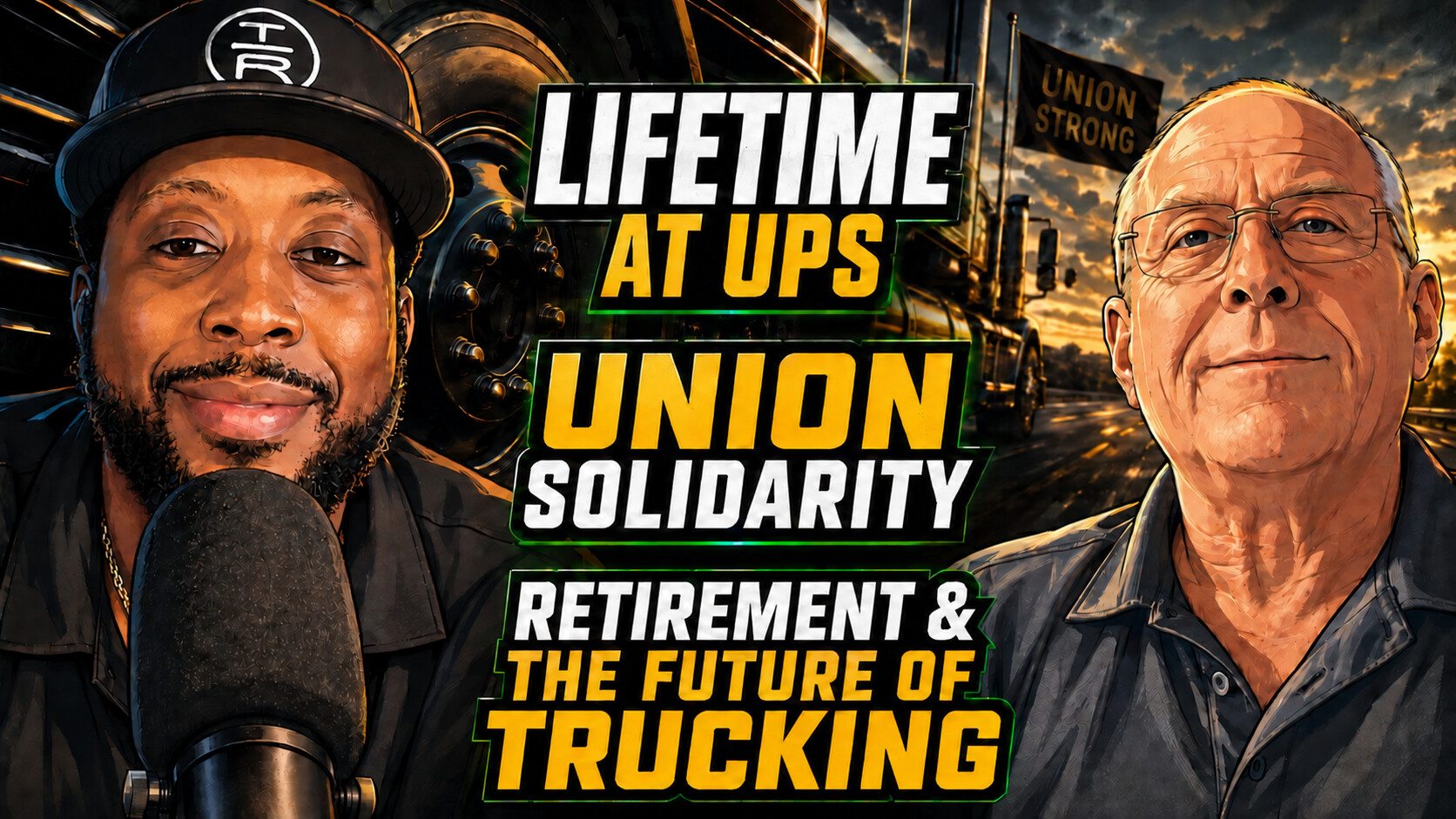
“If you get a union job, you’re going to be taken care of.” Scott Harren
Scott Harren begins with a sentence you have probably heard before, then supports it with the details of his own journey. He was born in St. Paul, trained as a teacher, earned his Class A license by renting a pickup and horse trailer for the test, and spent 31 years at UPS. When he retired, he walked away with his house paid off, a leather jacket, and what he calls a new life.
This episode runs longer because Scott covers the entire journey, including getting hired, surviving the physical demands, using the union, preparing for retirement, and building a meaningful life after UPS. These are the lessons that matter most if you or someone you care about works in delivery.
How He Earned His Class A and Why It Mattered
Scott did not follow the traditional CDL school route. He passed the written test and rented a friend’s dually and horse trailer to complete the skills test.
He had to take the test twice because the examiner failed him the first time for being too close to the curb. Scott paid about $150 for the rental and jokingly called it a “back alley Class A.”
That detail matters because it represents the practical and affordable routes some drivers have taken to enter the industry. Scott kept his Class A license as a backup while pursuing teaching, and it eventually proved useful.
His advice is simple. Build a skill you can depend on, even if your original goal takes you in another direction.
The Physical Toll of Package Cars, Feeders, and Overnight Work
Scott began his UPS career driving package cars, including five to ten cube vans. He completed around 150 stops a day while handling thousands of packages.
As the years passed, the vans became heavier and more crowded. Scott remembers reaching a point when the job “was tearing me up.”
He eventually moved into feeder work and spent his final 15 years as an over the road feeder driver. Those runs came with midnight starts and constantly changing schedules.
“Starting at one, starting at three, starting at five.”
The exhaustion added up over time. Scott remembers driving to Bismarck during a week when the snow was “as high as the hood.”
That single image explains why so many drivers decide to retire as soon as they are financially able.
The Union as a Working Tool
Scott describes the union as a toolbox, not a decoration. During his first week at UPS, he met his steward and received a contract book.
He believes too many younger members do not know their steward or understand the contract. That lack of involvement can have serious consequences.
His explanation of the grievance process offers a simple lesson in solidarity. You should not walk into the office alone. You should bring a steward. You should also challenge improper management changes before they become accepted as the new normal.
Scott is direct about the value of union protection. Five year contracts can secure wages, benefits, and predictability. Without union protection, workers can be left vulnerable to an employer saying, “We will just get somebody else.”
Scott encourages members to do three things:
Know your steward, business agent, and union hall. Save their numbers in your phone.
Treat the contract book like a Bible. Read it, understand it, and bring it to meetings.
Attend union meetings. When meetings do not reach a quorum, important votes and planning cannot move forward.
Retirement Planning, Surprises, and Healthcare Costs
Scott retired after 31 years, but his retirement did not happen by accident. He paid off his house, cleared his credit cards, and selected a specific retirement date.
He was able to keep his UPS medical coverage until age 65 before transitioning to Medicare. That transition created one of the biggest financial lessons he shares.
Once union medical coverage ends, supplements and out of pocket expenses can quickly become much more expensive than the costs paid by an active employee.
Scott recalls attending a union retiree meeting where a healthcare advisor recommended estimating medical inflation at 2 to 3 percent. In his experience, some expenses increased by 20 to 25 percent over nine years.
His warning is clear. Save more than conservative estimates suggest, and prepare for prescription costs, supplemental coverage, and unexpected medical expenses.
Retirement was not only about paying bills. Scott finally had time for fishing, car shows, volunteering at a nursing home, and spending time with his grandchildren.
His final day at UPS was surprisingly ordinary. He completed one final run, shared pie with the office, and received a leather jacket honoring his years of service.
Then he said, “Yeeha! Here we go.”
Why Younger Drivers Must Protect What They Have
Scott speaks honestly about the generational gap he sees in the workplace. Many younger drivers focus on the weekly paycheck, housing costs, immediate needs, or purchasing a vehicle.
In his view, some employees do not invest enough beyond their paycheck, which can leave them vulnerable when contracts are renegotiated or retirement approaches.
The demanding lifestyle also creates challenges. Rotating schedules and long hours can make it difficult to maintain hobbies, community relationships, and interests outside of work. Without those connections, retirement can become a harder adjustment.
Scott encourages younger drivers to attend union meetings, understand the resources available to them, and begin planning financially as early as possible.
Those resources may include legal assistance, financial counseling, food support, and retirement planning.
Autonomous Trucks, Artificial Intelligence, and the Future
Scott is not completely opposed to technology, but he remains skeptical and practical about its effect on workers.
He believes driverless trucks and artificial intelligence will change transportation. His concerns center on the questions companies sometimes avoid.
Who keeps their job?
Who receives the financial benefits?
Who remains responsible for safety?
What happens to the human relationships that have always helped supply chains function?
Scott imagines a command center where one person supervises several trucks. His concern is that companies may use that system to reduce the number of drivers.
“You just lost two driver jobs.”
His conclusion is straightforward. The union must be involved early, and members must demand transparency from companies testing new technology.
The Quote That Summarizes His Message
“By fighting for what you have, do not give up anything. Fight them tooth and nail.”
Scott Harren
That statement captures Scott’s message throughout the conversation. Protect your benefits, become involved, and prepare for life after the road.
Scott’s story is practical and personal. It includes an unconventional path to earning his Class A license, decades of physically demanding work, union protection that helped make retirement possible, and a new chapter centered on family and community service.
He wants younger drivers to take the same thoughtful approach. Read the contract. Know your steward. Save more money than you think you will need. Pay attention to technology that could reshape the profession.
For the complete conversation, including the stories about Ernie’s donuts, grievance meetings, and retirement planning, listen to the full episode.
Until then, remember Scott’s two simple rules. Protect what you have earned, and plant something meaningful to do when you close that final door.
If you are a retiree or a younger driver with a question Scott did not answer, bring it to your next union meeting. There is always someone who remembers how the same problem was handled before.
Check Out That’s Delivered Podcast's New Home
That’s Delivered Podcast now lives at its new home on the official website, where you can find episodes, updates, newsletters, and ways to connect with the community.
Visit the new home: https://thatsdelivered.com
Introducing truckingray.online
Trucking Ray Nonstop is your online destination for trucking tools, road safety alerts, weather updates, industry content, community connections, and more to help you on and off the road.
Visit: https://truckingray.online
Even when we are off, we are online. The road never stops, and neither do we. — Trucking Ray