Why telematics is finally about predicting the last five minutes, not just tracking the truck
Rudy Nemeth on cleaning up fragmented systems, practical AI today, and why drivers should see tech as a tool, not a spy.
“People don't want more technology; they want fewer problems.” — Rudy Nemeth
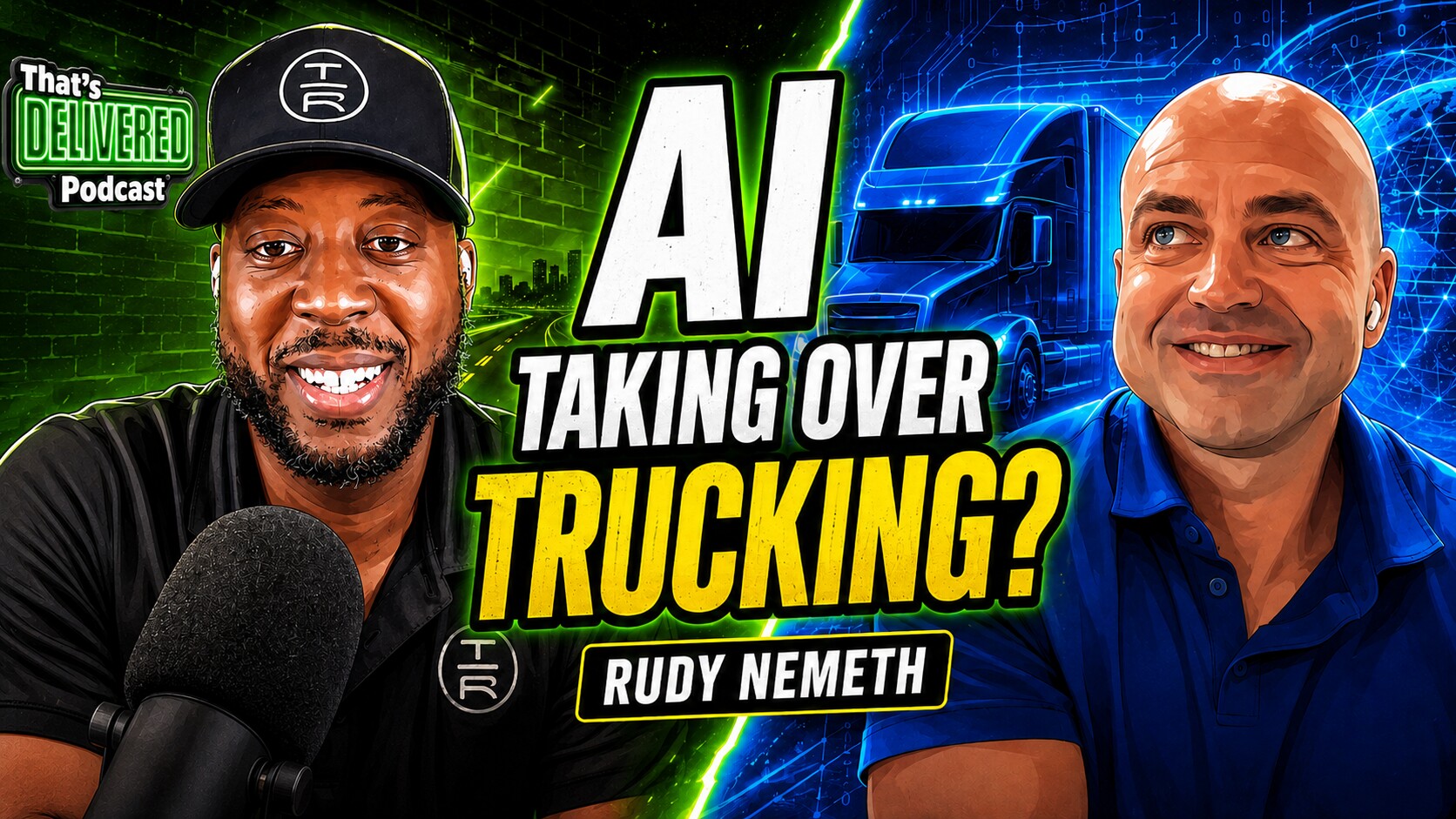
Rudy Nemeth has been in trucking tech since 2004, watching mobile computers go from DOS bricks to the cloud-connected platforms fleets have today. That line people want fewer problems, not more features is the organizing idea of this conversation. If you manage a small fleet or sit in the driver's seat, these are the parts of the tech story that actually matter.
What telematics really does now
Telematics started as location: where is the truck? Today it includes engine fault codes, hard-brake events, video and behavior signals. Rudy frames the near-term shift clearly: instead of explaining what happened yesterday, good telematics will tell you what will happen five minutes, five days, or five thousand miles from now.
Predictive maintenance: identify a part that will likely fail in the next few thousand miles and schedule repair before a breakdown.
Route optimization that learns: choose routes that avoid a planned road closure two weeks out, or steer clear of a customer who regularly blocks dock access.
The payoff for drivers is practical: fewer surprise detours, fewer deadheads, and navigation that understands a commercial vehicle's constraints rather than consumer mapping apps that favor convenience or ad placement.
One connected platform beats many patched systems
Rudy and Trucking Ray returned to the same failure mode several times: enterprises bolt on separate solutions (ELD here, video there, telematics over there) that don’t share clean data. Velocitor’s approach is to consolidate those inputs so the driver sees only what they need: “This is my next stop.”
That backend consolidation is not glamorous, but it’s where value is created fewer logins for drivers, fewer missed ETAs, and systems that actually route around problems instead of into them. Rudy also pointed out an early cost barrier that has largely gone away: camera systems that once cost about $2,000 per vehicle and $120 a month in monitoring are now affordable to small fleets.
Coaching, video and trust: set the alerts, not the alarm
Video and in-cab coaching are common now, but implementation decides whether drivers feel protected or policed. Rudy recommends dialing alerts into a fleet's safety strategy:
“A little less is sometimes more when you're driving down the road you don't get a lot of alerts at all, as you shouldn't. But the ones you do get, you will listen to.” — Rudy Nemeth
Practical rules Rudy mentioned: don't trigger rolling-stop alerts under 3 mph, or mute phone-pickup alerts while sitting in heavy traffic. Pilot phases matter: expect many alerts at first, then tune the system so false positives drop and driver acceptance rises.
AI where it helps (and where it doesn't yet)
Rudy separates useful AI from overhype. Working applications today include:
Predictive maintenance (real and material).
Route optimization that learns from planned vs. actual runs.
Risk scoring to flag higher‑risk routes or stops.
What isn't ready to replace people: full, autonomous dispatch or completely driverless fleets. Rudy's practical take: AI should feed smarter decisions to dispatchers, not replace them. Better information gives dispatchers capacity to make better calls the human still signs off.
Why smaller fleets are in a better spot than you think
The old world reserved advanced tech for big carriers. Rudy argues that has reversed: cloud software and lower hardware costs make capable stacks available to owner-operators and five‑to‑ten truck fleets. He noted two advantages for small fleets:
Faster implementation (some vendors deploy in ~30 days).
Less organizational inertia compared with large enterprises that take years to roll out systems.
If you run a small fleet, Rudy's advice is practical: prioritize clean delivery-stop data, try a modern integrated platform, and treat pilots as tuning exercises rather than proof of failure.
A word for drivers worried about autonomy
Rudy's reassurance: the move to autonomy is gradual and regulated. Expect incremental helpers first highway autonomy overnight, supervised by a human, not wholesale replacement. In the meantime, drivers are invaluable: the human eye on a load, the on-the-road safety network, the judgement that tech alone doesn't provide. Rudy's closing advice to drivers: learn the tools, attend a show, talk to manufacturers, and treat tech as something that helps you do your job better.
Practical takeaways to act on this week
If your fleet runs multiple point solutions, map where data breaks between them that gap is where most missed ETAs and manual double-entry live.
During any pilot, insist on a tuning period: accept noisy alerts for a short time, then cut false positives.
For small fleets, ask vendors for an integrated package (ELD + DVIR + routing + video). The sticker shock of the past is mostly gone.
If you want the full conversation, Rudy Nemeth is on LinkedIn (Rudy Nemeth at Velocitor Solutions) and Velocitor's site is velocitor.com. He mentioned he'll be at ATA and other trade shows this year — a good way to try tech in person and ask how vendors plan to tune alerts for drivers.
Think of this as a practical scorecard: predictive maintenance, smarter routing, tuned coaching, and simplicity in the cab. Do those four things well and you’ve made the day easier for the person who actually moves everything.
If you want the episode: listen in to hear the examples Rudy shared about early mobile bricks, the $2,000 camera days, and his view on why drivers should get curious instead of afraid.
Sponsors & Affiliates
Special thanks to our sponsors and affiliate partners who support this podcast and make this content possible:
Bumper to Bumper Easy CDL — https://b2b.easycdl-online.com/
Truck Parking Club — https://truckparkingclubcomllc.sjv.io/c/5766992/2019579/25053?trafsrc=partner_api (Use code DELIVERED)
Tree Ring Digital — https://www.treeringdigital.com/delivered/
Seat Specialists — https://www.seat-specialists.com/ (Use code TR104U for 10% off)
Check Out That’s Delivered Podcast's New Home
That’s Delivered Podcast now lives at its new home on the official website, where you can find episodes, updates, newsletters, and ways to connect with the community.
Visit the new home: https://thatsdelivered.com
Even when we are off, we are online. The road never stops, and neither do we. — Trucking Ray